
 Home
Home Account Login / Sign-Up
Apps: 1817
Dl's: 3443722
Dl's: 3443722
Sell your commercial Apps now!
 BloodGDXrelease
 Back
Back Package Contents (1) (hide/show)
The , originally released in 2011 specifically for Traktor , occupies a unique and somewhat frustrating space for modern rekordbox users. While its hardware remains a nostalgic favorite for many, its integration with rekordbox is far from "plug-and-play." Hardware Overview: A Pioneer Classic
The "mapping" of the DDJ-T1 to Rekordbox is a technical process that transforms the controller’s utility. A MIDI mapping acts as a translation layer, telling the software what to do when a physical button is pressed. Because the DDJ-T1 was initially designed for Traktor, it does not have native "plug-and-play" support for Rekordbox in the way modern controllers like the DDJ-FLX4 or DDJ-1000 do. Consequently, users relying on the DDJ-T1 with Rekordbox often utilize MIDI maps—specifically, the standard Pioneer MIDI template available in the unit’s utility settings paired with the "Import Export" mode in Rekordbox. ddj t1 rekordbox mapping
The DDJ-T1 is a highly versatile controller that offers a wide range of features and functions. However, out of the box, the controller's mapping may not be optimized for Rekordbox, which can lead to a few issues: Pioneer DDJ-T1 The , originally released in 2011
The intersection of legacy hardware and modern software presents a fascinating challenge in the digital DJ landscape. The Pioneer DDJ-T1 , released in 2011, was engineered specifically as a dedicated controller for Native Instruments' Traktor software. However, as Pioneer DJ pivoted aggressively to its proprietary ecosystem, rekordbox , many DJs attempted to migrate their trusted T1 hardware to this newer platform. Mapping the DDJ-T1 to rekordbox is a complex exercise that highlights both the incredible versatility of MIDI mapping and the intentional limitations of closed-software ecosystems. The Legacy of the DDJ-T1 Because the DDJ-T1 was initially designed for Traktor,
: You may encounter "ghosting" where LEDs stay lit or don't correspond correctly to the software state, as the
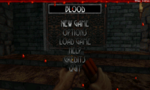
 Preview Pics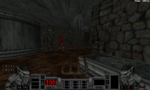
 Comments
 Download